In February of this year, Armando Massoca Toronda, a 2023 Master's student in Public Management from Mozambique at our university, was interviewed by China Youth Daily. During the interview, he shared his insights into the traditional Chinese Spring Festival culture.
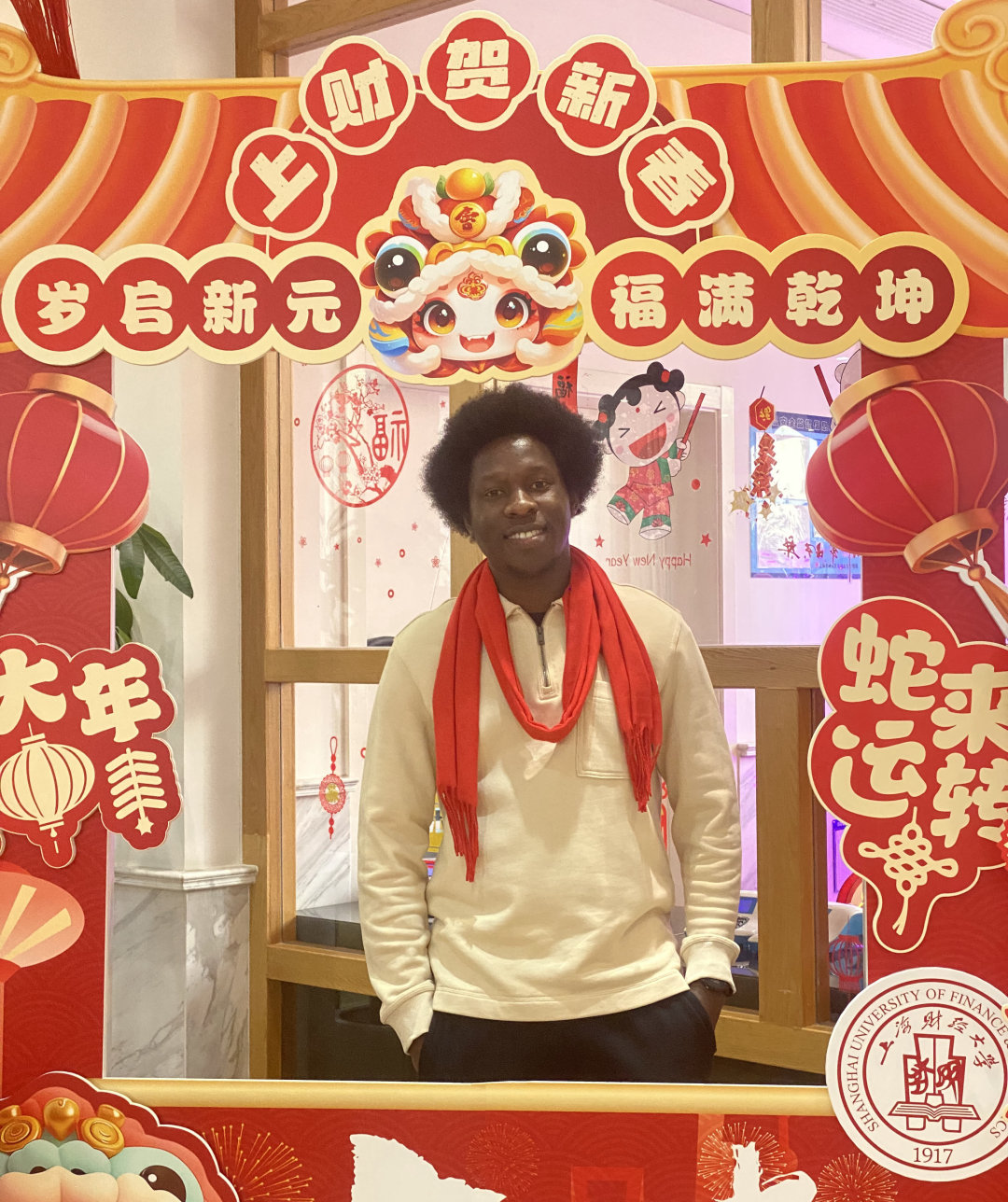
During my undergraduate years, I was fortunate to have the opportunity to study in China through a government scholarship. When I first arrived, I knew very little about China, and learning Chinese was full of challenges. However, it was through overcoming these challenges and solving various cross-cultural issues that I developed a deep interest in all aspects of Chinese culture. After graduating with my bachelor's degree, I quickly decided to come back to China for further studies.
The way Chinese people celebrate the Spring Festival is an important entry point for me to observe traditional Chinese culture. I know that this year's Spring Festival has special significance. My teacher told me that the successful inscription of the Spring Festival as a UNESCO heritage site is not only because it is a grand festival for family reunions but also because it represents the inheritance of traditional Chinese culture, carrying the deep emotions and memories of the Chinese nation. Before the Spring Festival, the university thoughtfully arranged a New Year's Eve dinner for students staying on campus. Everyone wore red scarves, sat together, and busily made dumplings, wrote "Fu" characters and Spring Festival couplets. The table was full of a variety of delicious dishes.
Although my calligraphy is not as good as that of my teachers and Chinese classmates, each stroke I write is also filled with expectations for the new year. We international students also sang "Two Tigers" in different languages, with the Shanghainese version being the most popular. I also participated in a lantern-making activity and made a red lantern with my own hands. The color red has profound implications in traditional Chinese culture. Red lanterns symbolize prosperity and carry people's hopes for driving away evil and protecting family safety.
The process of making dumplings was also very interesting. At first, the dumplings I made were all kinds of strange shapes. Either the skin broke or the filling came out. With the patient guidance of my Chinese classmates, I quickly mastered the skills of making dumplings, and the dumplings I made began to look more like the real thing. When eating Chinese food, I always insist on using chopsticks. There is a saying that eating with chopsticks can make people smarter!
In terms of celebrating the festival, there are many differences between Mozambique and China. In my country, the New Year is usually celebrated by small families of two generations, and there is no need to return to the hometown during the holiday. However, when Chinese people celebrate the Spring Festival, it is often a big reunion of several generations of a large family. The New Year's Eve dinner is the most important meal of the year. Before the Spring Festival, most of my Chinese classmates returned to their hometowns, and the campus suddenly became quiet. The number of people on the streets outside also decreased significantly. The gathering of family members from different places symbolizes the unity and cohesion of the family and is a vivid reflection of the Chinese spirit of unity.
Whether it is a small family or a large family, in the cultures of both our countries, there is a tradition of family members gathering together during festivals. I think respecting different cultures and seeking commonalities between them is a value that all of humanity pursues together.
In addition to the New Year's Eve dinner activities, Shanghai University of Finance and Economics has organized many colorful activities to introduce Chinese traditional culture to international students, and I am very happy to participate. Last year, on the Lantern Festival, at the "Lantern Festival Street Parade" in Siping Road Subdistrict, Shanghai, students from several universities formed a team to participate. We held lanterns and interacted warmly with the people on the scene. We experienced traditional handicrafts such as paper cutting and dough figurine making and tasted delicious foods like glutinous rice balls and sugar paintings. During the Dragon Boat Festival, the university organized dragon boat races for international students. Unfortunately, I was not selected, and I felt a bit regretful.
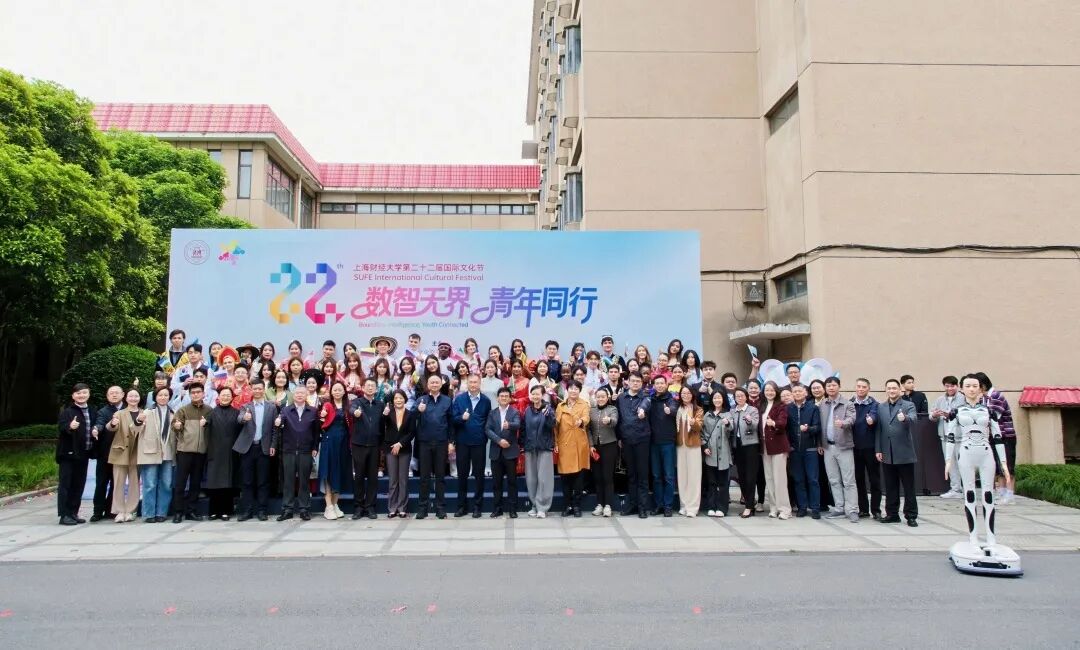
At the "Ancient Melody and Modern Sound" event, my Chinese classmates and I put on Hanfu, learned traditional Chinese etiquette, and experienced traditional skills such as blowing ink paintings, lacquering fans, and tea ceremonies. Accompanied by the playing of traditional Chinese musical instruments such as the erhu, pipa, and flute, the historical and literary knowledge taught by the teacher in the classroom suddenly became vivid images. Of course, we also actively share the cultures of our own countries. The annual International Cultural Festival held by the university is a carnival of multiculturalism, allowing everyone to feel as if they have traveled around the world in a short period of time.
I have also traveled to many places in China, such as Beijing, Xiamen, Zhuhai, Shenzhen, Xi'an, and Quanzhou. Each city has its own characteristics and charm. In the ancient town of Tongli in Suzhou, I visited the World Cultural Heritage site Tuisi Garden, experienced the custom of "walking over three bridges," and made tie-dye works by hand. When I went to Beijing, I tasted the famous Beijing roast duck. Beijing, the capital of China, is completely different in style from Shanghai. It is full of stories and the charm of history. Through these travels, I have seen a real and diverse China.
This winter vacation, my main task was to write a thesis, and I spent most of my time in the dormitory and the library. However, I also went to Yuyuan Garden, the Bund, and Lujiazui with my friends to experience the Spring Festival in Shanghai. During the Spring Festival, Shanghai is more lively and interesting than usual.
In China, I have gained knowledge, an understanding of Chinese culture, and precious friendships. I often share the details of my life in China with my family and friends in Mozambique through WeChat, letting them experience China with me. After seeing this, some friends said they wanted to come to China. I am looking forward to the opportunity to be their guide. I hope to become an ambassador of cultural exchange between Mozambique and China, helping more Mozambicans to know and love Chinese culture, and introducing my homeland to more Chinese people.