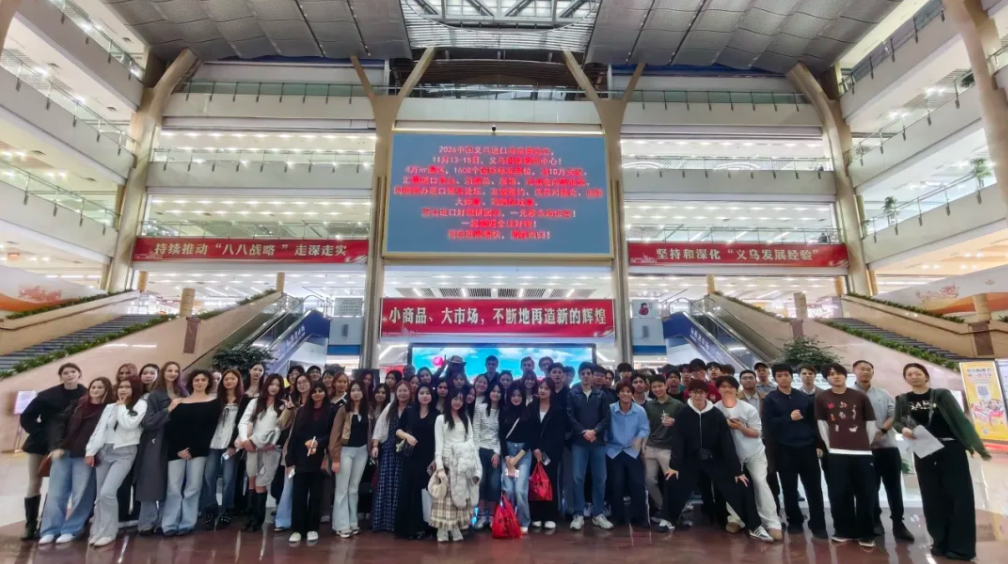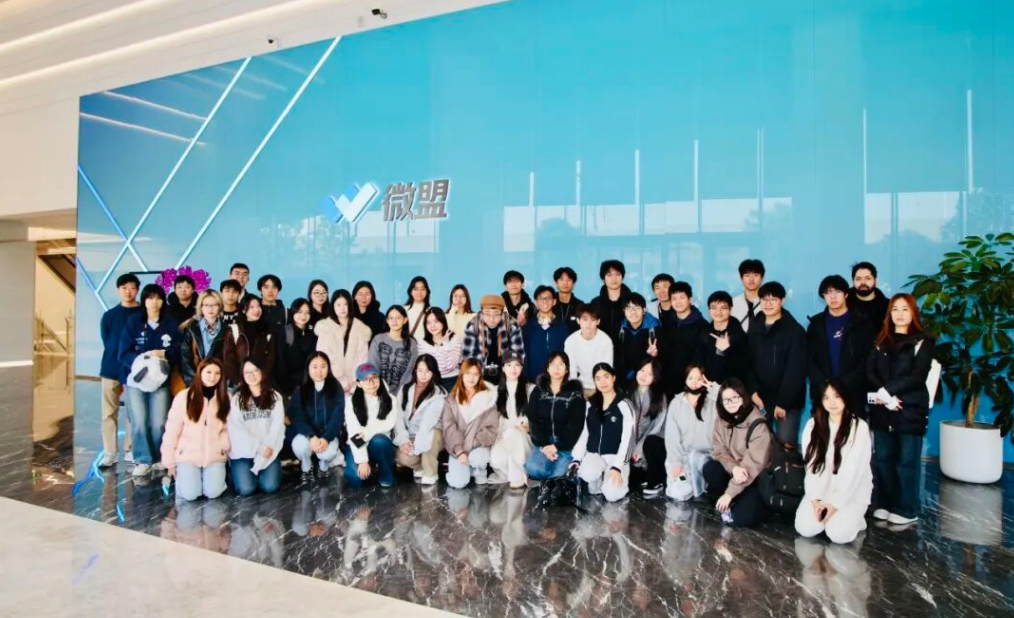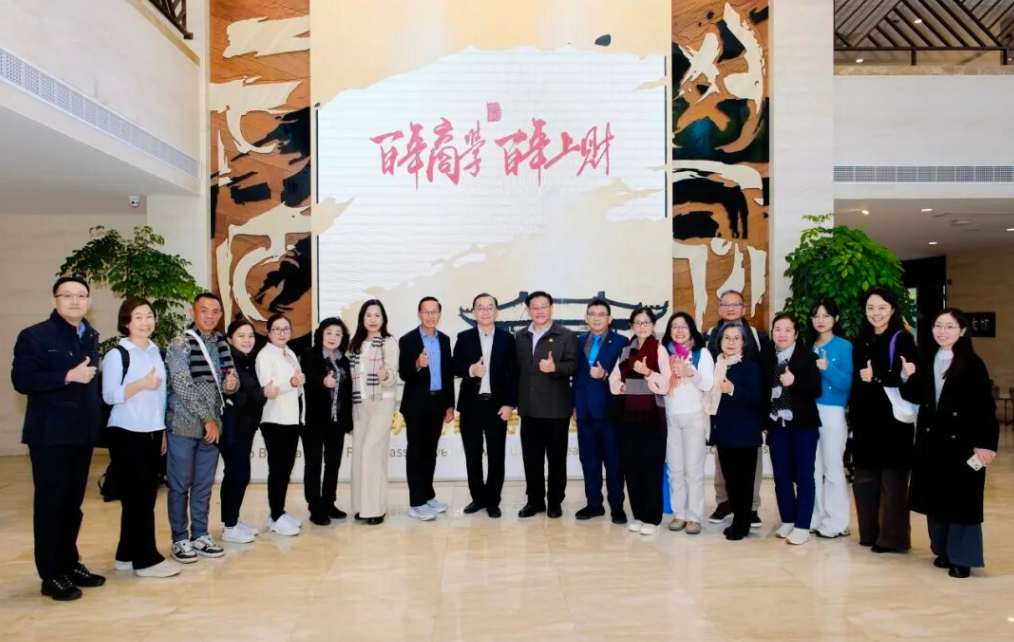
On 10 November, more than 40 international students studying in China and postgraduate students of the programme in International Chinese Language Education visited Baoshan District. They took part in the Baoshan “Cherry Blossom Talent Salon” series, jointly organised by the College of International Cultural Exchange of Shanghai University of Finance and Economics (SUFE) and the Baoshan District Talent Development Service Centre. The event was also one stop in the University's “Step Into” series. During the visit the students toured a robotics company, a digital technology company, a talent apartment complex and a service station for overseas talent. On the production line, at the question-and-answer table, over a cup of tea and across a pickleball court, they attended a “walking practice class”.
In the exhibition hall of Shanghai Dajie Robotics Technology Co., Ltd., robotic arms stretched out one after another and completed each process under programmed instructions. For many students entering a Chinese smart manufacturing enterprise for the first time, the scene overturned their assumptions about construction sites and workshops: it turns out that buildings and structural components can also be made with precision by robots. Some held up their phones to film the trajectory of the robotic arms; others stopped in front of the display boards to press for technical details.
The exhibition hall of Weimob Group had a very different atmosphere. A single screen linked stores, orders, members and the supply chain, with artificial intelligence at work in marketing, customer service and data analytics. A few unfamiliar industry terms found their way into the students' notes.
The door of a flat in the Koala Science and Innovation Port Talent Apartments opened onto en-suite bathrooms, a shared kitchen, fitness space and a roadshow hall. Staff explained that the apartments offer young talent a “move-in ready” service, together with community activities and space for entrepreneurial exchange. Where will I live, can I afford it, will I feel at home — the questions young people care about most found concrete answers in a model flat.
At Baoshan District's service station for overseas talent, a briefing on talent policy opened the session. On talent introduction, support for entrepreneurship and housing security, the staff went through the provisions one by one and answered questions on the spot. In the exchange, “what am I entitled to” gradually turned into “where do I go to apply”.
In the tea ceremony session, the tea specialist warmed the cups, added the leaves and poured the water in unhurried movements. Several international students learned to hold their cups and say “hao he” — it tastes good — in Chinese. For the postgraduates of International Chinese Language Education, the scene felt especially familiar: beyond language, the transmission of culture often resides in precisely such small gestures.
The finale was a pickleball exchange. The young sport, which is easy to pick up, had Chinese and international students playing together within a quarter of an hour; laughter, the sound of paddles and cheering merged into the liveliest footnote to the day.
From the production line to the model flat, from the question-and-answer table to the tea mat, the three segments formed a complete chain of education: international students come to understand China on the spot in a real city, while Chinese students learn to tell China's story through cross-cultural companionship.
The “Step Into” series is designed to take students into enterprises, into industrial parks and into the city. Working with the Baoshan District Talent Development Service Centre on this occasion opened a window for international students onto China's industries and urban governance, and represented an exploration of university–locality collaboration in education. What this class has planted may only become clear years from now; but on the afternoon of 10 November, the shape of China and of this city had already settled in the students' minds.