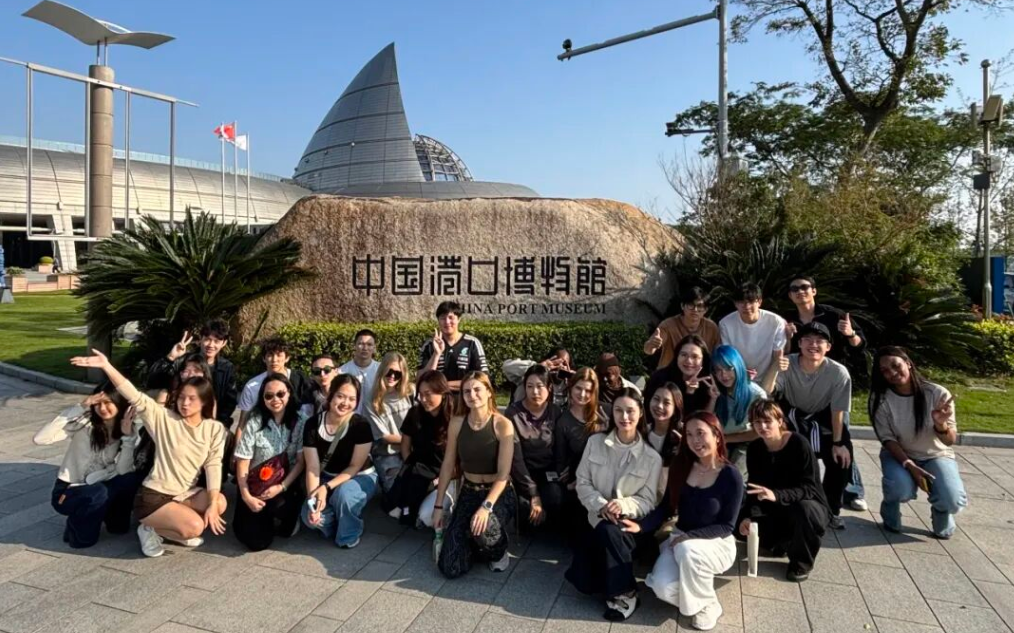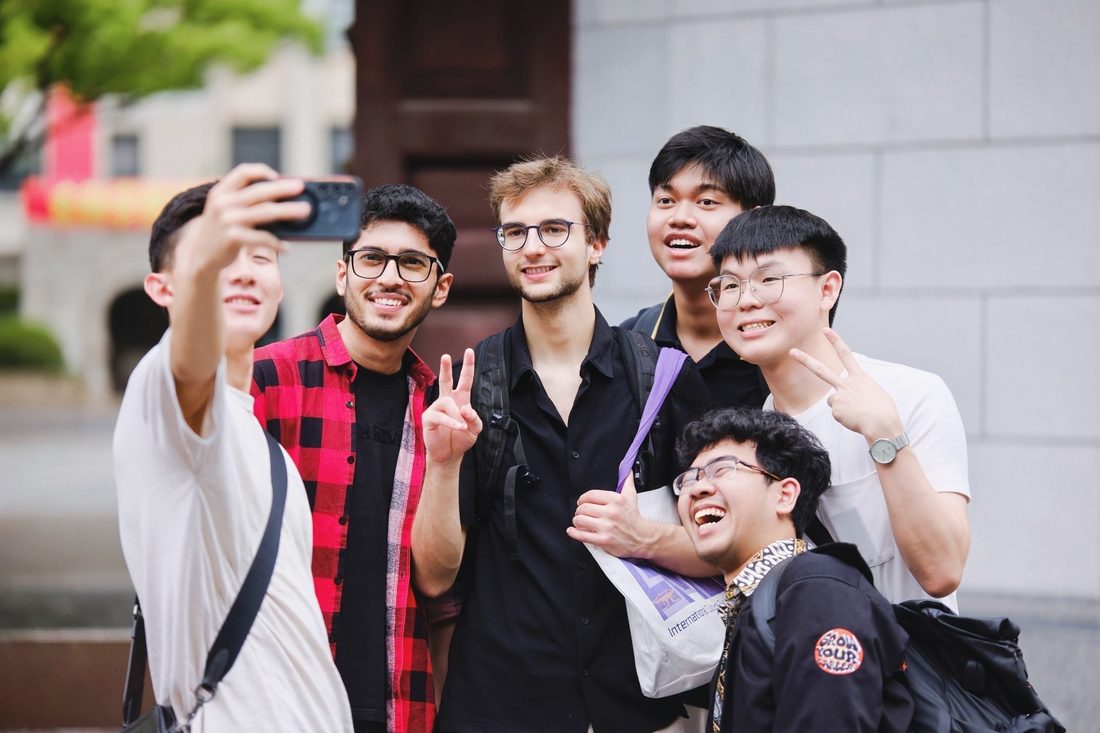
From 31 October to 1 November, more than 70 international students travelled to Ningbo for an “Experiencing China” social practice activity. Drawing on diverse settings — advanced manufacturing, port culture and heritage, the historical fabric of the city, and its new coastal districts — the activity enabled the international students to read, as they walked, the story of openness of this port city and to appreciate a vivid chapter of Chinese modernization.
At Ningbo Iron and Steel Co., Ltd., the students visited the company’s exhibition hall, production workshops, and logistics and supply-chain sites, observing at close range the full operation of a large, modern integrated steel enterprise. From raw-material intake and ironmaking and steelmaking to hot rolling and finished-product dispatch, they saw for themselves the complete industrial chain of Ningbo’s steel industry. Innovations such as green and low-carbon development, intelligent manufacturing, smart management and control, and a 5G fully connected factory displayed the vitality of the transformation and upgrading of China’s traditional industries and left a deep impression on the students from various countries.
Following the traces of the Maritime Silk Road, the students visited the China Port Museum and the Ningbo Museum. Before the thematic exhibitions — “A Port Connecting the World”, “A Land of Coastal Confucian Heritage”, the oriental “Divine Vessel”, “Ala” Old Ningbo and the art of bamboo carving — they stopped to study the artefacts and to trace the origins of Ningbo’s development as a city. Exhibit by exhibit, the collections tell of the growth and change of the Beilun Port Area of the Ningbo–Zhoushan Port and of the millennium-long story of the Maritime Silk Road. The group then went up to the observation deck for a distant view of the port area: large vessels coming and going and cranes rising and falling showed the busy yet orderly scene of a world-class port, giving the students a direct sense of the strong momentum of China’s port development.
In the warm autumn sunshine, the group strolled along Nantang Old Street, visiting shops of intangible cultural heritage, tasting local Ningbo snacks and admiring the architecture of traditional Jiangnan houses, feeling the folk customs of the city amid its lively everyday bustle and the cultural warmth held in Jiangnan’s lanes. The Old Bund (Laowaitan) is among the oldest Bunds in China: as early as the Tang and Song dynasties it was an important commercial port of the southeast, opening twenty years earlier than the Bund in Shanghai. Walking through the district, where the site of the former customs house, Western-style banks and modern buildings blending Chinese and Western styles stand interspersed, the international students traced, in every brick and tile, the years of modern maritime trade and of exchange and mutual learning between Chinese and foreign civilisations.
The two-day visit to Ningbo connected, at one end, the pulse of the times of a great port of intelligent manufacturing and, at the other, a thousand years of historical lineage of the Maritime Silk Road. Using their own footsteps as their measure, the international students came to understand the city’s defining character of “calm seas and tranquil waves” — the very meaning of the name Ningbo — and truly felt the unbroken spirit of openness of China. As they walked and observed, the international students experienced China for themselves; these young envoys of friendship and exchange between China and other countries will in the future tell vibrant and vivid stories of China to the world.