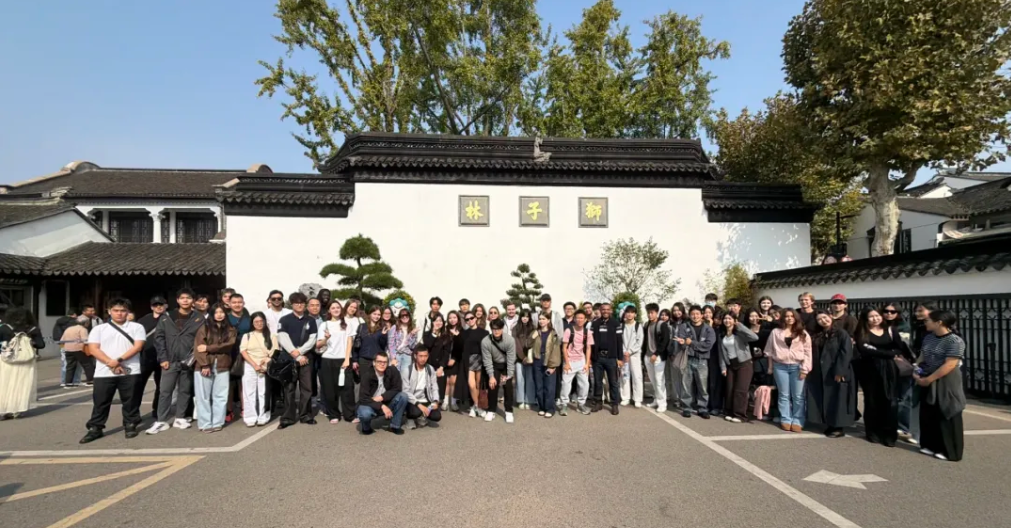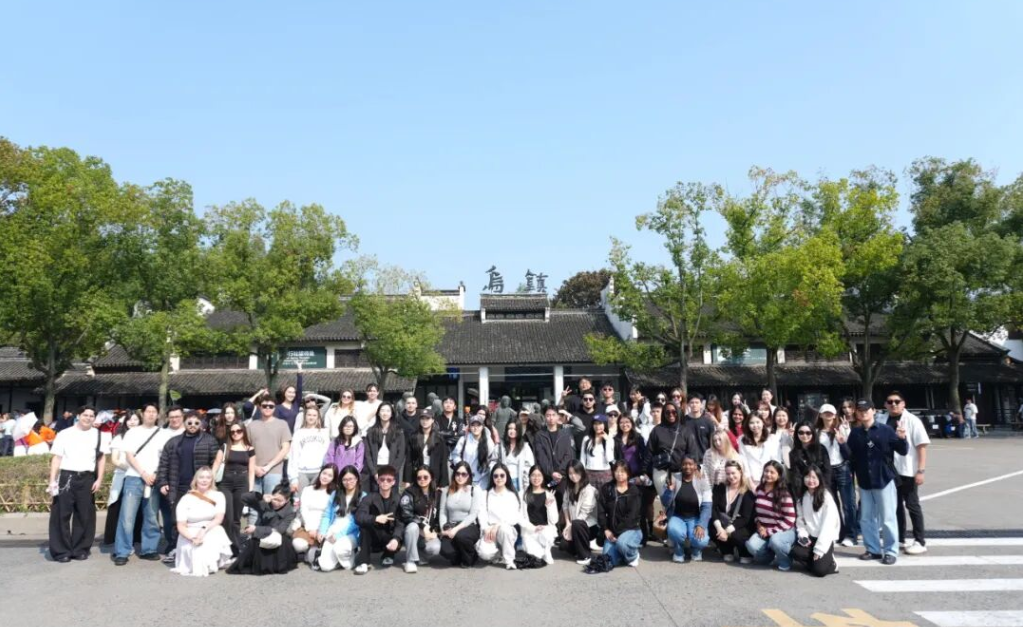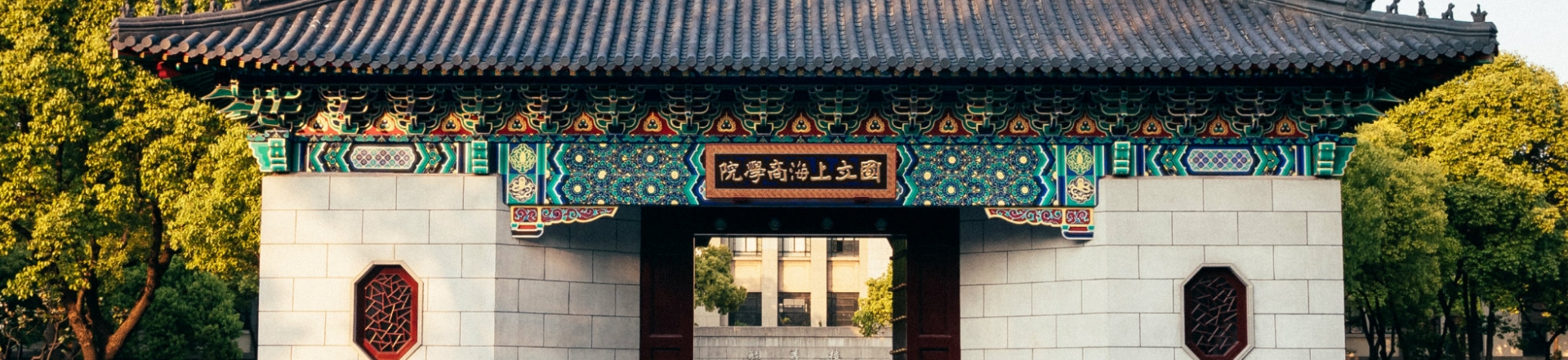
To deepen international students' understanding of China's national conditions and culture, the College of International Cultural Exchange of Shanghai University of Finance and Economics (SUFE) organised an “Experiencing China” social practice activity on 1 November. International students from a number of countries left the campus for Suzhou, where they visited classical gardens, tasted intangible cultural heritage cuisine and explored historic districts in depth, experiencing an authentic and multi-dimensional Chinese culture as they walked.
For many international students newly arrived in China, impressions of the country often remain confined to modern urban landscapes or media reports. The first stop of the Suzhou trip, the Lion Grove Garden, offered them a cross-section through which to observe classical Eastern aesthetics.
Faced with the intricate rockeries and winding corridors, a student from France experienced a sense of space entirely different from that of Western architecture. “The garden does not let you see through it at a glance; you have to walk in yourself and turn a few corners before new scenery opens up before you,” she shared with the accompanying teacher afterwards. The teachers took the opportunity to explain the gardening technique of “changing scenery with every step”, and through first-hand touch and walking, the reserved and subtle philosophical mood of traditional Chinese culture became concrete and tangible.
Beyond the visual impact of culture, the “tongue-tip experience” of intangible cultural heritage likewise left a deep impression on the students. At the flagship restaurant of Suzhou Tai Tai, serving Suzhou-style cuisine inscribed as intangible cultural heritage, dish after dish of Jiangnan fare upholding the principle of “eating in season” was brought to the table. The University had done thorough preparation before the trip, giving the students a detailed introduction to the history and craftsmanship of Suzhou-style cuisine.
“The sweet-and-sour flavour of the squirrel-shaped mandarin fish and the exquisite knife work amazed me — it is completely different from the Chinese food I have had abroad,” said a student from Russia. Through this lunch, she not only tasted authentic Jiangnan flavours, but also came to appreciate the refinement and care the Chinese bring to their culinary culture. This immersive experience of heritage cuisine gave the students a more direct and deeper understanding of Chinese food culture.
If the morning programme was a “guided” cultural experience, the free exploration of the Pingjiang Road Historic and Cultural District in the afternoon was an open-ended journey of discovery. Without a unified commentary, the students scattered in small groups into the water lanes to capture “pictures of China” of their own. “Before I came to China, my image of the country came mostly from films, TV series or social media. Today, on Pingjiang Road, I saw another China — a China where elderly people draw water, children come home from school, and neighbours chat at the entrance of the alley. Nobody deliberately told me about this China; I saw it with my own eyes,” said a student from Malaysia. This unpolished everyday vibrancy let her feel the true warmth of Chinese society.
The University has always encouraged international students to travel around China and see the country for themselves, in the spirit of “seeing once is worth hearing a hundred times”. The Suzhou trip was not only a cultural excursion, but also a vivid lesson in China's national conditions. By creating more opportunities to engage with real society, the University hopes that international students will not only benefit from cross-cultural exchange, but also draw on their first-hand experience to tell the world objective and vivid stories of China.