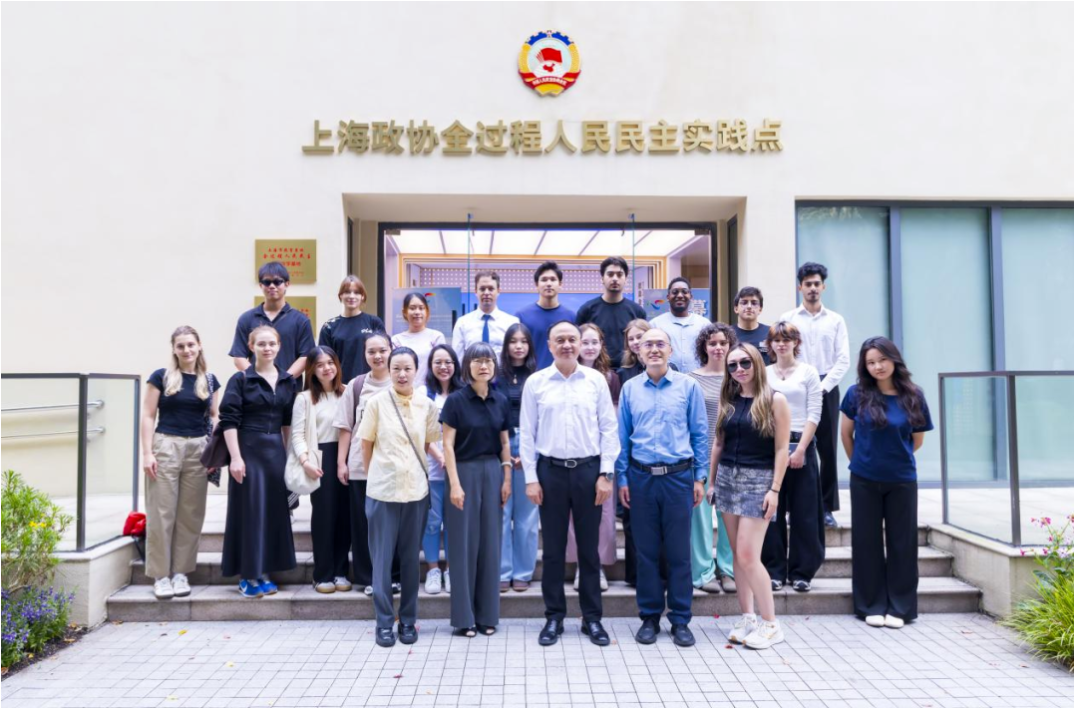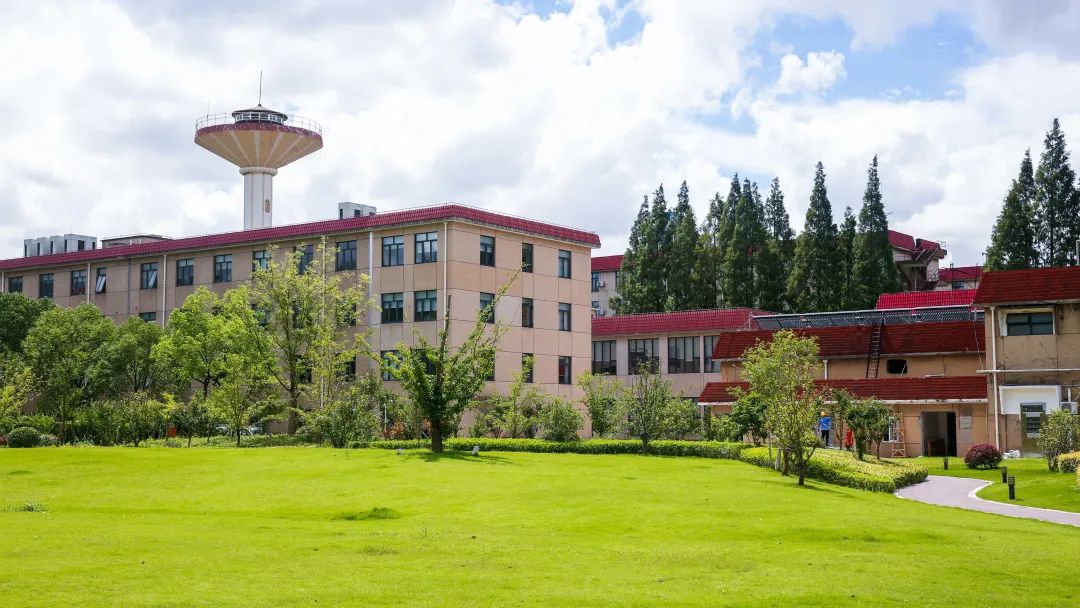
On 10 July, with the conclusion of the 'Global Issues Presentation' session and the closing ceremony, the 'Chinese Bridge · International Youth in the Digital-Intelligent Era: Chinese+' Summer Camp, funded by the Centre for Language Education and Cooperation under the Ministry of Education and hosted by Shanghai University of Finance and Economics (SUFE), successfully drew to a close at SUFE. Nearly 20 young students from around the world gathered at SUFE. During the two-week immersive programme, they jointly explored the frontiers of the digital economy, experienced the charm of Chinese culture, and forged deep friendships through the exchange and integration of ideas.
'Two weeks ago, we came to Shanghai University of Finance and Economics with boundless curiosity about the digital economy. Here, we not only glimpsed the cutting-edge appeal of artificial intelligence and big data, but also truly felt the vibrant pulse of China’s digital economy through classroom discussions and enterprise visits. The learning experience of ‘Chinese + Digital-Intelligent’ will become an important foundation for us to face the future and connect with the world,' said Du Qiuyuan, a Vietnamese international student, expressing the collective sentiment of all participants at the closing ceremony.
Since the launch of the programme on 29 June, participants have engaged in a diverse range of learning modules, including a series of lectures on the frontiers of the digital economy, digital Chinese language sessions, enterprise visits, and global issues presentation and exchange activities. Through these, they gained a profound appreciation for SUFE’s strong academic foundation in financial and economic management and its internationalised educational environment, as well as the dynamic development of China’s digital economy.
The curriculum design of the programme was meticulously crafted, featuring a series of lectures focused on the frontiers of the digital economy. Five scholars from the Digital Economy School of SUFE shared insights with the participants on topics including artificial intelligence and business applications, youth leadership in the digital-intelligent era, future trends and applications of the digital-intelligent economy, big data analysis and economic forecasting, and digital globalisation and policy planning. In addition, the programme specially included a series of advanced digital Chinese courses, such as case studies in the economics of language, business etiquette in digital spaces, and AI-assisted Chinese business writing, equipping international students with the skills to navigate cross-cultural digital communication with ease. During each lecture, participants actively raised questions and engaged in discussions, demonstrating their keen interest and thoughtful consideration of cutting-edge issues in the digital economy.
Beyond the classroom, the programme included carefully arranged enterprise visits that offered participants a firsthand look at the 'front line' of China’s digital economy. At the Pudong Software Park, students visited the Pudong Software Incubator and the Zhangjiang Digital Chain (Metaverse) Feature Experience Hall 'SPSPace MetaWorld', gaining an all-in-one exposure to cutting-edge technologies such as 'digital twin foundations, large language models, virtual digital assistant avatars, and immersive cultural tourism VR experiences'. 'The metaverse is no longer an abstract concept, but an industry ecosystem that can be seen and touched,' remarked a student from Russia after the visit.
At West Bund Group, participants visited the operational base of the China-BRICS Artificial Intelligence Development and Cooperation Centre and Z·Pilot, Shanghai’s first AI black technology experience store located in Modespace. They gained a comprehensive hands-on experience with various AI technological products in areas such as smart wearables, office learning, intelligent health, and audio equipment, touching firsthand the real-world application of AI technology moving from the laboratory to everyday life. 'Previously we learned about AI theory in class, but today we finally saw with our own eyes how AI is transforming the lives of ordinary people. China’s innovation capability in applying AI is truly amazing,' remarked a participant from Vietnam after trying out several cutting-edge AI products.
In addition, participants visited XPENG Motors to gain an in-depth understanding of the technological innovations behind smart electric vehicles and the future of mobility ecosystems. They also toured Meituan Group to explore the digital operations and platform economy model of this leading lifestyle services company. From classroom to enterprise, from theory to practice, and from underlying technologies to consumer endpoints—participants gained a holistic understanding of the real dynamics of China’s digital economy through this 'mobile classroom'.
Beyond academic study, the programme also opened a window for participants to experience Chinese culture. In the tai chi experience session, each movement reflected the balance of strength and flexibility inherent in Eastern philosophy. During the cloisonné enamel craft workshop, the glint of gold wire and vibrant coloured glazes showcased the artistry and craftsmanship of traditional techniques. Moreover, the programme organised exchange activities with SUFE undergraduates and a collective birthday celebration, fostering friendship through the exchange of ideas and deepening mutual understanding via language interaction.
One of the most distinctive aspects of the programme was the global issues presentation session. Each group delivered Chinese-language presentations on two topics: how digital inclusive finance can support rural revitalisation, and how green digital economies can balance 'technological development' and 'carbon emission reduction'. These presentations fully demonstrated the integrated learning outcomes of 'Chinese Plus Digital Economy'.
At the closing ceremony, Rong Jun, Vice Dean of the College of International Cultural Exchange at Shanghai University of Finance and Economics, encouraged participants to take back what they had seen and learned in China, and to contribute youthful energy to the exploration of digital economic development as well as to the promotion of people-to-people and digital exchanges between China and other countries.
This summer camp, supported by the 'Chinese Plus Digital Economy' Research Centre jointly established by the Centre for Language Education and Cooperation of the Ministry of Education and Shanghai University of Finance and Economics, deeply integrated Chinese language teaching with cutting-edge developments in the digital economy. It provided international students with a high-level research and learning experience and served as a vivid example of how SUFE leverages its academic strengths and deepens its educational internationalisation. In the future, the university will continue to build more platforms for youth exchange between China and other countries by drawing on its strengths in economics and management and its rich resources in international education, enabling global students to understand China through experiencing it, and to connect with the world through understanding China.